
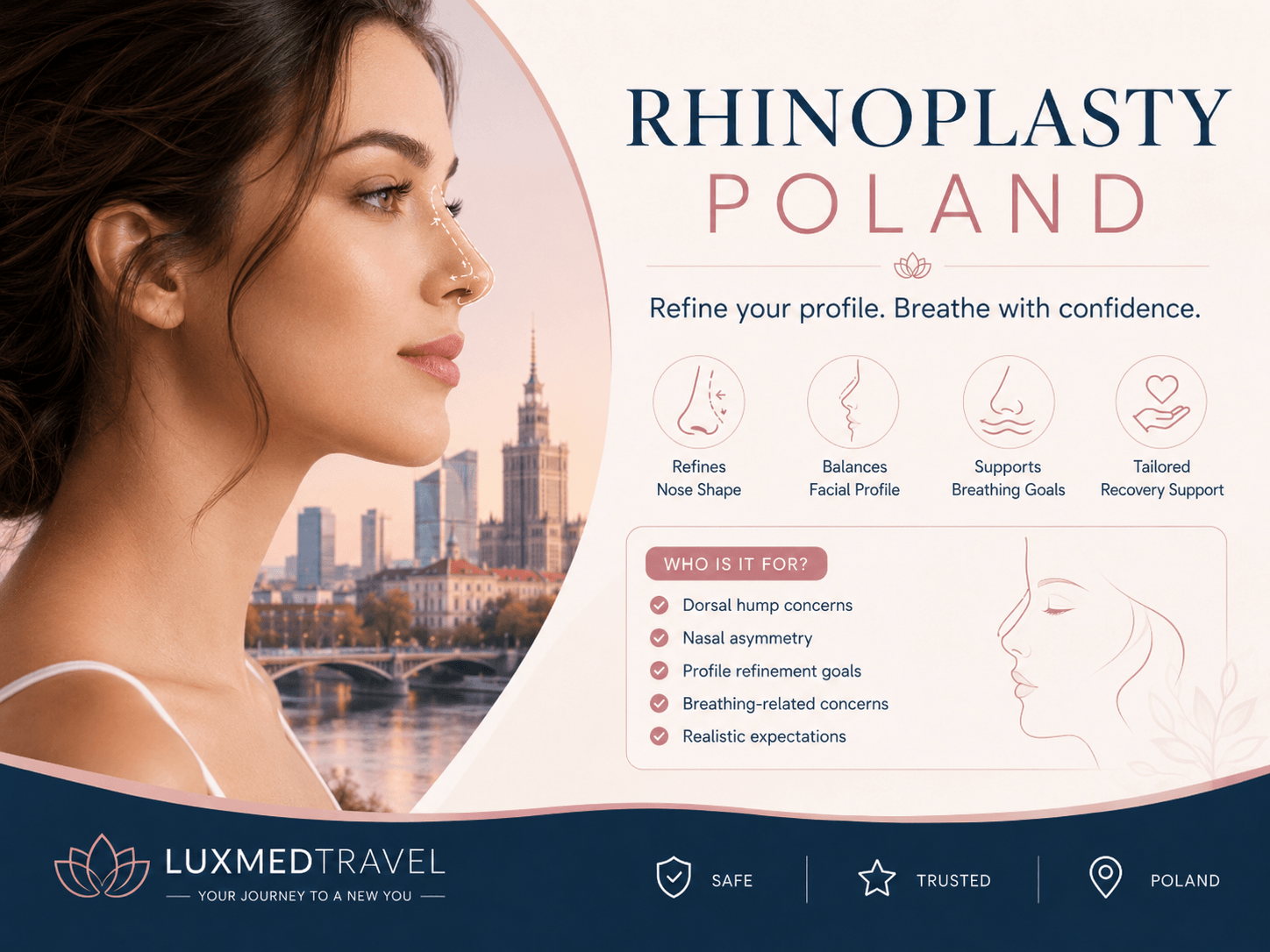
Rhinoplasty Poland is a popular search for patients who are considering nose surgery abroad and want to explore private plastic surgery options in Europe. Rhinoplasty, also known as nose reshaping or a nose job, is a surgical procedure that can change the shape, size or structure of the nose. It may be performed for cosmetic reasons, functional breathing concerns or a combination of both.
Many patients consider rhinoplasty because the nose plays an important role in facial balance. Even a small change to the bridge, tip, nostrils or nasal profile can affect the overall harmony of the face. For this reason, rhinoplasty should be planned carefully and personally. The best result is usually not about creating a “perfect” nose, but about creating a nose that suits the patient’s face, ethnicity, skin thickness, breathing function and expectations.
At LuxMedTravel, we help international patients explore rhinoplasty options in Poland with clinic matching, consultation coordination, travel planning support and aftercare guidance. Whether you are travelling from the UK, Ireland or another European country, our team can help you understand the process and request a personalised treatment plan.
Estimated package cost: Please consult us for the best price options in Poland.
What Is Rhinoplasty?
Rhinoplasty is a surgical procedure designed to reshape the nose. It can involve changing the nasal bridge, nasal tip, nostrils, nasal bones, cartilage or overall nasal proportions. Depending on the patient, rhinoplasty may focus on cosmetic improvement, breathing function or correction after previous trauma or surgery.
Rhinoplasty may be considered for concerns such as:
- A bump on the nasal bridge
- A drooping nasal tip
- A wide nasal tip
- A crooked nose
- A nose that looks too large for the face
- Wide nostrils
- Nasal asymmetry
- Previous nose injury
- Breathing concerns related to nasal structure
- Dissatisfaction after previous rhinoplasty
Every nose is different. A successful rhinoplasty plan should consider facial proportions, skin thickness, cartilage strength, nasal airway, ethnic background and long-term healing. This is why a proper consultation with a qualified plastic surgeon or ENT facial plastic surgeon is essential before deciding.
Why Consider Rhinoplasty in Poland?
Poland has become a popular destination for private medical and cosmetic treatment among international patients. Many people researching rhinoplasty abroad consider Poland because of its European location, modern private clinics, experienced medical teams and accessible travel routes from the UK and other European countries.
Patients may consider rhinoplasty in Poland because of:
- Private rhinoplasty consultation options
- Access to experienced nose surgery teams
- Modern clinic and hospital facilities
- Short travel routes from many European cities
- English-speaking patient coordination
- Treatment planning support before travel
- Accommodation and transfer assistance
- Personalised aftercare guidance
- Opportunity to organise surgery with travel support
Cities such as Warsaw, Kraków, Wrocław, Poznań and Gdańsk are often researched by international patients considering nose surgery in Poland. The most suitable city or clinic depends on your nose structure, desired result, surgeon availability, hospital facilities, travel route and recovery needs.
LuxMedTravel can help you compare suitable options and understand the process before making a decision.
Who May Be Suitable for Rhinoplasty?
Rhinoplasty may be suitable for patients who are unhappy with the appearance of their nose, have structural nasal concerns or want to improve facial balance. It may also be considered by patients with breathing concerns related to nasal shape or previous injury.
You may be considered for rhinoplasty if:
- You are in good general health
- Your facial growth is complete
- You have realistic expectations
- You understand that results take time to settle
- You are unhappy with the shape or proportion of your nose
- You have a bump, crooked nose or tip concern
- You have nasal asymmetry
- You have breathing concerns that require assessment
- You do not smoke or can stop before surgery
- You can follow recovery instructions carefully
Rhinoplasty may not be suitable if expectations are unrealistic, if the patient wants an extreme change that does not suit their face, or if there are medical risks that make surgery unsafe. A qualified surgeon must assess your nose, breathing, skin, cartilage and expectations before recommending treatment.
Cosmetic Rhinoplasty
Cosmetic rhinoplasty focuses on improving the appearance of the nose and its balance with the rest of the face. This may include reshaping the bridge, refining the tip, narrowing the nose, adjusting nostrils or correcting asymmetry.
Common cosmetic goals may include:
- Smoother nasal bridge
- More balanced side profile
- Refined nasal tip
- Better nose-to-face proportion
- Straighter nasal appearance
- More natural-looking nasal shape
- Improved confidence in facial appearance
A natural rhinoplasty result should not look the same on every patient. A nose that suits one person may not suit another. Facial structure, chin position, forehead shape, cheekbones, lip balance and ethnicity should all be considered during planning.
Functional Rhinoplasty
Functional rhinoplasty focuses on improving nasal breathing or correcting structural problems that affect airflow. Some patients may need correction of a deviated septum, collapsed nasal valve or other internal nasal issues.
Functional concerns may include:
- Difficulty breathing through the nose
- Nasal obstruction
- Previous nasal injury
- Crooked nasal structure
- Nasal valve collapse
- Snoring or airflow concerns requiring assessment
- Breathing problems after previous rhinoplasty
Not every breathing issue can be solved with rhinoplasty. Some patients may need ENT assessment, septoplasty or another procedure. If breathing is a concern, this should be discussed clearly during consultation.
Open Rhinoplasty and Closed Rhinoplasty
Rhinoplasty can be performed using different surgical approaches. The most suitable technique depends on the nose structure, desired changes and surgeon preference.
Open Rhinoplasty
Open rhinoplasty involves a small incision across the columella, the tissue between the nostrils. This allows the surgeon to lift the nasal skin and see the underlying structure more clearly.
Open rhinoplasty may be recommended for complex cases, tip reshaping, revision surgery or significant structural changes. It may leave a small scar, but this is usually positioned discreetly and often fades over time.
Closed Rhinoplasty
Closed rhinoplasty involves incisions made inside the nostrils, so there is no external columella incision. This approach may be suitable for selected patients who need less complex reshaping.
Closed rhinoplasty may have advantages for certain cases, but it is not suitable for every nose. The best approach should be chosen by the surgeon after assessment.
The technique matters, but the surgeon’s experience, planning and understanding of nasal anatomy are more important than choosing a method based only on the name.
Natural Rhinoplasty Poland
Many patients want a natural rhinoplasty result rather than an obvious or over-operated appearance. A natural rhinoplasty should improve balance without removing the character of the face. The aim is usually to create a nose that looks refined, harmonious and believable.
A natural rhinoplasty plan may consider:
- Facial proportions
- Ethnic background
- Skin thickness
- Nasal tip support
- Bridge height
- Chin and profile balance
- Nostril shape
- Breathing function
- Long-term healing
Patients should be careful with unrealistic reference photos. A celebrity nose or heavily edited image may not be suitable for your face. A good consultation should focus on what is safe, achievable and natural for your anatomy.
Ethnic Rhinoplasty Poland
Ethnic rhinoplasty refers to nose surgery that respects the patient’s natural facial features and ethnic identity. The goal is not to erase identity, but to improve balance while preserving character.
Patients from different backgrounds may have different nasal anatomy, skin thickness, cartilage strength and aesthetic goals. For example, some patients may want more tip definition, some may want bridge refinement, and others may want nostril adjustment while keeping a natural appearance.
Ethnic rhinoplasty requires careful planning because over-reduction can create an unnatural result or affect breathing. The surgeon should understand both the patient’s goals and the structural needs of the nose.
Revision Rhinoplasty Poland
Revision rhinoplasty is a secondary nose surgery performed after a previous rhinoplasty. It may be considered when the patient has cosmetic dissatisfaction, breathing problems, asymmetry, collapse or healing-related concerns after earlier surgery.
Revision rhinoplasty is usually more complex than primary rhinoplasty because scar tissue, reduced cartilage and altered anatomy may be present. Some patients may need cartilage grafting from the septum, ear or rib, depending on the case.
Revision rhinoplasty may be considered for:
- Breathing problems after previous surgery
- Over-reduced nasal bridge
- Drooping or pinched nasal tip
- Asymmetry
- Visible irregularities
- Nasal collapse
- Unsatisfactory cosmetic result
- Trauma after previous surgery
A revision rhinoplasty consultation should be detailed and realistic. In some cases, the surgeon may advise waiting until healing from the previous surgery is complete before considering another operation.
Rhinoplasty Poland: How the Process Works
LuxMedTravel supports patients throughout the treatment planning process. The aim is to make each step clearer before you travel.
1. Initial Enquiry
You contact our team through WhatsApp, phone or the enquiry form. We ask about your goals, nose concerns, breathing symptoms, previous surgeries, medical history and preferred travel dates.
2. Photo and Medical Pre-Assessment
For rhinoplasty planning, clinics often request clear photos from different angles. This may include front view, side profiles, three-quarter views and base view of the nose. These images help the surgeon understand your nasal shape, facial proportions and possible treatment options.
You may be asked about:
- Your main cosmetic concern
- Breathing difficulties
- Previous nose surgery
- Previous nasal trauma
- Allergies or sinus problems
- Current medications
- Smoking status
- Medical conditions
- Desired result
- Reference photos, if available
- Expectations from surgery
3. Clinic and Surgeon Matching
Based on your case, LuxMedTravel helps coordinate with suitable clinics or hospitals in Poland. The goal is to connect you with an appropriate medical provider for rhinoplasty consultation and treatment planning.
4. Personalised Treatment Plan
After assessment, you may receive a personalised treatment plan. This may include recommended surgical approach, expected hospital or clinic stay, required tests, accommodation support, transfer planning and aftercare instructions.
5. Travel to Poland
Depending on your selected clinic and surgeon availability, you may travel to Warsaw, Kraków, Wrocław, Poznań, Gdańsk or another suitable destination in Poland. Our team can help with practical travel planning before your trip.
6. Surgery and Early Recovery
Before surgery, the clinic performs the required checks and confirms your suitability. After surgery, you may have a nasal splint, internal support or dressings depending on your procedure. The medical team will explain how to care for your nose and what to avoid.
7. Follow-Up and Return Home
Your surgeon or medical team will advise when it is safe to travel home. You should allow enough time for early recovery, swelling monitoring and follow-up review before flying or travelling long distance.
What May Be Included in a Rhinoplasty Package?
Package details may vary depending on the clinic, surgeon, procedure complexity and your medical needs. A personalised rhinoplasty treatment plan may include:
- Online consultation support
- Rhinoplasty surgeon coordination
- Clinic or hospital communication
- Pre-operative guidance
- Required medical checks
- Surgery planning
- Anaesthesia and operating room services
- Rhinoplasty surgery
- Hospital or clinic stay, if required
- Post-operative monitoring
- Nasal splint or dressing guidance
- Hotel or accommodation support
- Airport and clinic transfer support
- English-speaking patient coordination
- Aftercare instructions
- Follow-up communication
The final package depends on your nose structure, procedure type, selected clinic, surgeon assessment, required tests, accommodation, transfers and aftercare needs.
Estimated package cost: Please consult us for the best price options in Poland.
How Long Do You Need to Stay in Poland?
The recommended stay for rhinoplasty in Poland depends on the surgeon, clinic protocol, procedure complexity and your recovery. Many patients need to stay long enough for surgery, early recovery and a follow-up review before travelling home.
Your treatment journey may include:
- Arrival before surgery
- Pre-operative consultation
- Medical checks
- Surgery day
- Early recovery period
- Splint or dressing review
- Follow-up appointment
- Medical clearance before travelling home
You should not rush your return journey. Flying too soon after surgery may increase discomfort and swelling. Your medical team should advise when it is safe for you to travel.
Recovery After Rhinoplasty
Recovery after rhinoplasty takes time. Initial swelling and bruising may improve within the first few weeks, but the nose continues to heal and refine gradually. Final results can take many months, and in some cases up to a year or more, especially around the nasal tip.
During recovery, you may need to:
- Keep your head elevated
- Avoid touching or bumping your nose
- Avoid strenuous exercise
- Avoid heavy lifting
- Avoid wearing glasses directly on the nose if advised
- Avoid smoking
- Avoid alcohol during early recovery
- Take medication as prescribed
- Keep follow-up appointments
- Follow splint and dressing instructions
- Avoid sun exposure on healing skin
- Be patient with swelling
Bruising around the eyes can happen after rhinoplasty. Swelling can make the nose look larger or uneven during early recovery. This does not necessarily reflect the final result.
Patients should understand that rhinoplasty healing is slow and requires patience.
Rhinoplasty Results: What to Expect
Rhinoplasty results are not immediate. The nose may look swollen after surgery, and the final shape develops gradually. Some areas, especially the nasal tip, can take longer to refine.
Results depend on:
- Nasal anatomy
- Skin thickness
- Cartilage strength
- Surgical technique
- Healing response
- Swelling pattern
- Previous surgery
- Trauma history
- Aftercare
- Patient expectations
Patients with thicker skin may experience slower definition. Revision rhinoplasty patients may also need longer healing time because scar tissue can affect swelling and final shape.
A good rhinoplasty result should look balanced from the front, side and three-quarter view. It should also respect breathing function and long-term nasal support.
Benefits of Rhinoplasty
For suitable patients, rhinoplasty may improve facial balance, nose shape and confidence. If functional correction is included, it may also support nasal airflow in selected cases.
Possible benefits may include:
- More balanced facial proportions
- Smoother nasal bridge
- Refined nasal tip
- Straighter nasal appearance
- Improved side profile
- Better nostril symmetry
- Correction of previous injury appearance
- Improved confidence
- Support for breathing concerns when functional correction is needed
- More natural facial harmony
Results vary between patients. Rhinoplasty should be planned around your face, not around a standard nose shape.
Risks and Safety Considerations
Rhinoplasty is a surgical procedure and carries risks. It should only be considered after consultation with a qualified surgeon.
Possible risks may include:
- Bleeding
- Infection
- Reaction to anaesthesia
- Swelling and bruising
- Poor wound healing
- Scarring
- Changes in skin sensation
- Nasal asymmetry
- Breathing difficulty
- Septal perforation
- Unsatisfactory cosmetic result
- Need for revision surgery
- Prolonged swelling
- Changes in smell, rarely
- Skin or tissue problems, rarely
Your personal risk depends on your health, nasal anatomy, smoking status, previous surgeries and procedure complexity. Revision rhinoplasty and complex structural cases may carry higher complexity.
Choosing the right clinic, surgeon and aftercare plan is important. LuxMedTravel helps patients ask the right questions, understand their options and prepare for surgery abroad more carefully.
Rhinoplasty Abroad: Important Safety Points
Planning rhinoplasty abroad requires more than choosing a clinic from photos. Patients should think carefully about communication, follow-up care, travel timing and what happens if they have concerns after returning home.
Before choosing rhinoplasty abroad, consider:
- Surgeon qualifications and experience
- Clinic or hospital standards
- Before and after examples
- Whether the surgeon understands your goals
- Whether breathing function will be assessed
- How long you need to stay after surgery
- What aftercare is included
- What happens if complications occur
- Whether you can communicate easily with the team
- Whether revision policy is clearly explained
A safe treatment plan should not feel rushed. Patients should have enough time to ask questions and understand the risks, benefits and alternatives.
Preparing for Rhinoplasty in Poland
Preparation is important for safe and organised surgery abroad. Before rhinoplasty, the clinic may provide instructions based on your medical profile and procedure plan.
Preparation may include:
- Medical history review
- Blood tests
- Anaesthesia assessment
- Medication review
- Smoking cessation guidance
- Photo assessment
- Breathing assessment if needed
- Travel planning
- Accommodation planning
- Recovery planning
- Avoiding certain medications if advised
- Arranging support after returning home
- Following pre-operative instructions carefully
You should be honest about previous surgery, trauma, breathing issues, allergies, medications and smoking. Accurate information helps the medical team plan more safely.
Local Treatment Planning in Poland
Poland offers several cities that may be suitable for international rhinoplasty patients. Depending on clinic availability and surgeon specialism, patients may consider nose surgery in or near Warsaw, Kraków, Wrocław, Poznań or Gdańsk.
Each city may offer different practical advantages:
- Warsaw is a major international travel hub with strong transport connections.
- Kraków is popular with international visitors and has convenient travel routes.
- Wrocław may be suitable for selected private healthcare providers.
- Poznań can be convenient for patients considering western Poland access.
- Gdańsk may be suitable for patients looking at northern Poland routes.
The best location depends on the clinic, surgeon, procedure plan and your travel needs. LuxMedTravel can help you understand which option may be more suitable for your case.
Questions to Ask Before Choosing a Rhinoplasty Clinic
Before choosing a clinic or surgeon, you should feel informed and confident. Important questions may include:
- Is the surgeon qualified and experienced in rhinoplasty?
- How many rhinoplasty procedures does the surgeon perform?
- Does the surgeon perform primary and revision rhinoplasty?
- Will my breathing be assessed?
- Is open or closed rhinoplasty more suitable for me?
- What result is realistic for my nose and face?
- Can I see before and after examples?
- How long should I stay in Poland?
- When can I fly home?
- What aftercare is included?
- What happens if I have a concern after returning home?
- What are the risks in my case?
- Will I need cartilage grafting?
- How long will swelling last?
- When will I see the final result?
- What is the revision policy?
A good consultation should provide clear answers, realistic expectations and a personalised treatment plan.
Estimated Package Cost
Estimated package cost: Please consult us for the best price options in Poland.
The final package cost depends on your nose structure, medical needs, selected clinic, surgeon assessment, procedure complexity, hospital or clinic stay, required tests, accommodation, transfers and aftercare plan. Because rhinoplasty is highly personalised, we recommend contacting our team for a tailored consultation instead of relying on a fixed online price.
Contact LuxMedTravel today and we will help you explore suitable rhinoplasty options in Poland.
Frequently Asked Questions About Rhinoplasty Poland
What is rhinoplasty?
Rhinoplasty is a surgical procedure that reshapes the nose. It may be performed for cosmetic reasons, breathing concerns or correction after injury or previous surgery.
Is rhinoplasty the same as a nose job?
Yes. Rhinoplasty is commonly known as a nose job or nose reshaping surgery.
Who is suitable for rhinoplasty in Poland?
Suitability depends on your health, nasal anatomy, facial growth, breathing function, expectations and surgeon assessment. A qualified surgeon must review your case before confirming suitability.
Can rhinoplasty improve breathing?
In some cases, rhinoplasty or related nasal surgery may help improve breathing if structural problems are present. Breathing concerns should be assessed by a qualified specialist.
What is the difference between open and closed rhinoplasty?
Open rhinoplasty uses a small incision between the nostrils and allows wider access to nasal structures. Closed rhinoplasty uses incisions inside the nostrils. The best approach depends on your case and surgeon recommendation.
How long do I need to stay in Poland after rhinoplasty?
The required stay depends on your surgeon and recovery. You should allow enough time for surgery, early recovery and follow-up review before travelling home.
Can I get a fixed rhinoplasty price online?
We recommend requesting a personalised consultation. The final package depends on procedure complexity, clinic selection, tests, accommodation, transfers and aftercare. Please consult us for the best price options in Poland.
How long does rhinoplasty recovery take?
Initial swelling and bruising may improve within weeks, but the nose continues to refine gradually. Final results can take many months and sometimes a year or more.
Will rhinoplasty leave a scar?
Closed rhinoplasty has incisions inside the nostrils. Open rhinoplasty may leave a small scar between the nostrils, usually positioned discreetly. Your surgeon will explain the approach.
Can I have revision rhinoplasty in Poland?
Revision rhinoplasty may be possible for suitable patients, but it is more complex than primary rhinoplasty. A detailed assessment is needed before confirming treatment.
Is ethnic rhinoplasty available in Poland?
Some surgeons offer rhinoplasty planning that respects ethnic features and facial identity. The goal should be natural balance rather than removing character.
When can I fly after rhinoplasty?
Your surgeon or medical team should advise when it is safe to fly. You should not rush travel after surgery because swelling, discomfort and recovery needs vary.
Will I need to wear a splint after rhinoplasty?
Many patients wear a nasal splint after surgery. Your medical team will explain how long it should stay in place and how to care for it.
Can I choose the nose shape I want?
You can discuss your goals and share reference photos, but the final plan must be based on your anatomy, skin, cartilage, breathing function and what is realistically achievable.
How do I start my rhinoplasty consultation in Poland?
You can contact LuxMedTravel by WhatsApp, phone or enquiry form. Our team will collect your basic details and help guide you through the next steps.
Call to Action
Considering rhinoplasty in Poland?
Contact LuxMedTravel today for a personalised consultation, clinic matching and treatment planning support.
Estimated package cost: Please consult us for the best price options in Poland.
Speak with our team on WhatsApp or send your enquiry now.