
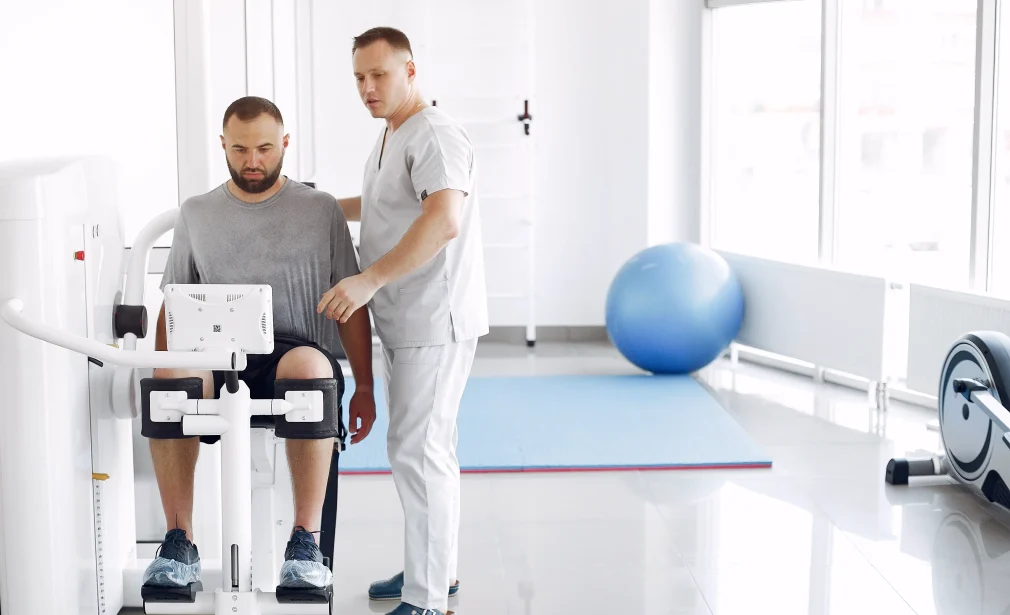
Chronic pain in your joints, bones, or spine can feel like a constant barrier, holding you back from the activities you love and diminishing your quality of life. The simple acts of walking, lifting, or even resting can become sources of persistent discomfort. At Lux Med Travel, we understand that this is more than a medical issue; it’s a personal one. We are dedicated to connecting you with world-class orthopedic solutions in Poland that not only alleviate pain but also restore the freedom of movement essential to living fully.
The field of orthopedics is, at its heart, a discipline of restoration. The term itself, first used in 1741, is derived from the Greek words orthos (“correct” or “straight”) and paideion (“child”). Its origins lie in the compassionate art of correcting skeletal deformities in children—a foundation built on the principle of restoring the body to its natural, intended function. This philosophy of healing and correction remains the cornerstone of modern orthopedic practice in Poland.
Today, orthopedics has evolved into a highly advanced medical specialty. It encompasses a vast range of surgical and non-surgical treatments for conditions affecting the musculoskeletal system—the intricate network of bones, joints, ligaments, tendons, muscles, and nerves that allows you to move. From degenerative diseases like arthritis to acute sports injuries, spinal disorders, and trauma, orthopedic specialists in Poland employ cutting-edge techniques to help patients of all ages reclaim their mobility and live without pain.
Your journey back to an active, pain-free life should not be limited by geography, high costs, or long waiting lists. Lux Med Travel serves as your dedicated partner, providing seamless access to elite orthopedic care in Poland’s leading medical institutions. We manage every detail, allowing you to focus on what truly matters: your health and recovery.
Comprehensive Care for a Full Spectrum of Orthopedic Conditions
Understanding your condition is the first step toward finding the right solution. Our network of orthopedic specialists in Poland provides expert diagnosis and treatment for a comprehensive range of musculoskeletal issues. We have organized the most common conditions by the affected area to help you identify the source of your discomfort and learn more about the advanced care available.
Conditions of the Knee
The knee is a complex, weight-bearing joint, making it particularly susceptible to injury and age-related wear.
- Knee Osteoarthritis: This is the most common form of arthritis, caused by the gradual breakdown of protective cartilage in the knee joint. As the cartilage wears away, bones can begin to rub together, leading to deep aching pain, stiffness, swelling, and a distinct clicking or grating sensation (crepitus). Everyday activities like walking, climbing stairs, or standing become increasingly painful.
- Anterior Cruciate Ligament (ACL) Tears: A common and often debilitating injury, especially among athletes. It typically occurs during sudden stops or directional changes and is often accompanied by a “pop,” rapid swelling, severe pain, and a feeling of instability, where the knee feels like it might give way.
- Meniscus Tears: The meniscus acts as a shock absorber between the shinbone and thighbone. A tear from a forceful twist or rotation causes pain (especially when straightening the leg), swelling, stiffness, and sensations of catching, locking, or clicking in the joint.
Conditions of the Hip
The hip joint is crucial for mobility, and conditions affecting it can severely impact daily life.
- Hip Arthritis (Osteoarthritis): Involves cartilage erosion, causing deep groin pain that may radiate to the thigh or buttocks. Stiffness makes bending over difficult, and as it progresses, audible cracking or crunching (crepitus) may occur during movement.
- Hip Fractures: A serious break in the upper femur, often from a fall in older adults. Symptoms include severe pain, inability to walk or bear weight, bruising, swelling, and a leg that appears shorter or turned outward.
Conditions of the Shoulder
The shoulder’s wide range of motion makes it vulnerable to injury and degeneration.
- Rotator Cuff Tears: Caused by injury or wear, symptoms include a dull ache deep in the shoulder, weakness when lifting or rotating the arm, and worsening pain at night, especially when lying on the affected side.
- Shoulder Arthritis: Results from cartilage wear in the ball-and-socket joint. Causes pain at rest or with movement, stiffness, loss of range of motion, and grinding or clicking sensations.
- Shoulder Dislocation: Occurs when the humerus is forced out of the socket. Causes extreme pain, visible deformity, inability to move the arm, swelling, and sometimes numbness or tingling down the arm.
Spinal Conditions
Spinal pain can radiate and significantly affect mobility and comfort.
- Herniated Disc: The soft center of a spinal disc pushes through a tear, potentially pressing on a nerve. In the lower back, this causes sciatica—sharp pain radiating from the buttock down the leg. In the neck, pain travels down the arm. Numbness, tingling, and muscle weakness are common.
- Spinal Stenosis: Narrowing of spinal spaces puts pressure on nerves. Lumbar stenosis causes leg pain or cramping when standing or walking, relieved by sitting or bending forward. Cervical stenosis can cause neck pain, arm or leg weakness, and balance issues.
Advanced Orthopedic Treatments: Your Path to Recovery
Our partner facilities in Poland are committed to a patient-first philosophy, offering a full spectrum of treatments tailored to your diagnosis, lifestyle, and recovery goals. The journey begins with conservative care, with surgery considered only when necessary—ensuring you receive the right care at the right time.
A Conservative-First Philosophy
Surgery is not always the first answer. Many conditions can be managed non-invasively to reduce pain, inflammation, and improve function.
- Physical Therapy and Lifestyle Modifications: Targeted exercises strengthen supporting muscles, improving stability and reducing pain. Maintaining a healthy weight decreases stress on joints.
- Medications and Supportive Devices: Anti-inflammatory drugs relieve pain and swelling. Braces, splints, or canes provide support and protection during healing.
- Advanced Injection Therapies: For persistent pain, options include corticosteroid injections (temporary relief), hyaluronic acid (“gel shots” for lubrication), and regenerative treatments like Platelet-Rich Plasma (PRP) to promote natural tissue repair.
Minimally Invasive & Arthroscopic Surgery
When surgery is needed, Polish surgeons are experts in minimally invasive techniques. Arthroscopy, or “keyhole surgery,” uses small incisions and a camera to diagnose and treat joint issues with precision. Commonly used for meniscus repairs, rotator cuff injuries, and removing loose cartilage, it offers less pain and faster recovery than open surgery.
The Gold Standard: Joint Replacement (Arthroplasty)
For severe joint damage—often from advanced arthritis—joint replacement (arthroplasty) is the gold standard for eliminating pain and restoring function. This procedure removes damaged cartilage and bone and replaces them with a durable artificial joint. Polish orthopedic surgeons perform total and partial replacements for the hip, knee, and shoulder using state-of-the-art implants designed for longevity and natural movement. The goal: return you to an active, pain-free life.
The Future of Precision: Robotic-Assisted Surgery in Poland
Robotic-assisted surgery represents the cutting edge of joint replacement. Leading hospitals in Warsaw, Kraków, Wrocław, and Poznań utilize advanced systems like Mako and ROSA for hip and knee replacements.
The process begins with a 3D model of your anatomy, allowing for meticulous pre-surgical planning. During the procedure, the robotic arm assists the surgeon in making bone cuts and positioning the implant with sub-millimeter precision—achieving optimal alignment and soft tissue balance.
Benefits for patients include:
- Unparalleled Precision: Ensures perfect implant fit, critical for long-term success.
- Improved Soft Tissue Balance: Real-time adjustments create a more stable, natural-feeling joint.
- Faster, More Comfortable Recovery: Less tissue trauma means reduced pain, less bleeding, and quicker rehabilitation.
- High Success Rates: Robotic joint replacements in Poland show excellent outcomes, with 90–95% success in pain relief and restored mobility.
This advanced technology is available through Lux Med Travel as part of an affordable, world-class care package.
The Polish Advantage: World-Class Orthopedic Care, Unmatched Value
Poland has emerged as a top destination in Europe for orthopedic surgery, offering a powerful combination of quality, affordability, technology, and prompt access. This makes it not just a viable alternative, but often the superior choice for your care.
Uncompromising Quality & EU-Compliant Standards
The most critical factor is quality. Poland’s leading private hospitals adhere to strict European Union healthcare standards. While formal JCI accreditation is less common, many facilities undergo rigorous national and EU-level audits, ensuring high safety and care standards. Polish orthopedic surgeons are highly trained, with many having studied or worked in Germany, the UK, or the US. They perform thousands of complex procedures annually and are early adopters of new technologies and techniques.
Exceptional Affordability without Compromise
The most compelling advantage is cost. Due to lower operational expenses and favorable economic conditions, patients save 50–70% compared to the US, UK, or Western Europe. These savings do not reflect lower quality—they simply make premium care, including robotic surgery, financially accessible.
| Procedure | Average Cost in USA | Average Cost in UK | Average Cost in Poland (Your Savings) |
| Total Knee Replacement | ~$40,000 | ~$15,500 | ~$8,000 – $13,000 (Up to 75% Savings) |
| Total Hip Replacement | ~$40,000 | ~$15,000 | ~$9,000 – $15,000 (Up to 70% Savings) |
| Robotic Knee Replacement | Often higher | Limited availability | ~$12,000 – $16,000 |
Costs are approximate and vary based on patient needs. Data compiled from international medical pricing sources.
Access to Cutting-Edge Technology
Choosing Poland means access to advanced medical technology. Partner hospitals feature state-of-the-art imaging, modern operating rooms, and robotic-assisted surgery platforms like Mako and ROSA. Polish specialists are also leaders in regenerative medicine, offering PRP and stem cell therapies to accelerate healing and repair tissues with minimal invasiveness.
Immediate Access to Care
In many public healthcare systems, wait times for orthopedic surgery can stretch to months or years—prolonging pain and worsening conditions. In Poland’s private sector, patients can typically schedule a consultation within days and undergo surgery shortly after. This immediate access is a crucial advantage that supports better outcomes and faster recovery.
Your Seamless Patient Journey with Lux Med Travel
Traveling abroad for surgery can seem daunting. That’s why Lux Med Travel offers a comprehensive, concierge-level service that manages every detail. We remove the stress, so you can focus entirely on healing.
Step 1: Free Initial Consultation & Personalized Treatment Plan
Your journey starts at home. Share your medical records and imaging (X-rays, MRIs). We arrange a secure remote consultation with a top Polish orthopedic specialist. You’ll receive a customized treatment plan and a transparent, all-inclusive quote—no hidden fees.
Step 2: Stress-Free Travel & Arrival
Once you decide to proceed, our team handles flights, accommodations, and visa support. Upon arrival in Poland, a Lux Med Travel representative greets you at the airport and transfers you to your hotel. A multilingual liaison supports you throughout your stay, ensuring clear communication and seamless coordination.
Step 3: Treatment in a World-Class Facility
You’ll be treated at a modern, EU-compliant hospital that meets the highest standards of safety and care. Pre-op assessments ensure you’re ready for surgery. The procedure is performed by your specialist in a state-of-the-art operating theater. After surgery, you recover in a private room with attentive nursing care.
Step 4: Recovery & Supervised Rehabilitation in Poland
A safe recovery is our priority. Unlike services that rush patients home, we include a dedicated in-country rehabilitation period. After hospital discharge, you’ll stay in Poland to begin physical therapy under expert physiotherapists who collaborate with your surgeon. This “rehabilitation buffer” ensures you’re stable and mobile before traveling home, reducing risks and supporting long-term success.
Step 5: Aftercare & Continued Support at Home
Our support continues after you return. We arrange follow-up teleconsultations with your surgeon to monitor progress. We also send your complete medical records to your local doctor, ensuring seamless continuity of care and supporting your ongoing recovery at home.
Hip Replacement Package in Poland
| Estimated Package Cost | Please consult us for the best price options in Poland. |
|---|---|
| Expected Result | Pain reduction, improved mobility, return to low-impact activities |
| Anesthesia | General or regional (epidural-spinal) |
| Stay in Poland | 12 days (hospital & hotel) |
| Physical Therapy | 1 session per day |
| Provided Equipment | Crutches, walker, medicines, pain management |
| Back to Office | 6–8 weeks |
| Driving | 6–8 weeks |
| Follow-Up | As scheduled, based on medical need |
| Eligibility | Hip X-rays or MRI, preoperative form, medical records, and blood tests required. |
All-inclusive: treatment, high-quality implants, hospitalization, physiotherapy, flights, transfers, and insurance.
Knee Replacement Package in Poland
| Estimated Package Cost | Please consult us for the best price options in Poland. |
|---|---|
| Expected Result | Pain reduction, enhanced mobility, ability to resume low-impact sports |
| Anesthesia | General or regional |
| Stay in Poland | 12 days (hospital & hotel) |
| Physical Therapy | 1 session per day |
| Provided Equipment | Crutches, walker, medicines, pain management |
| Back to Office | 6–8 weeks |
| Driving | 6–8 weeks |
| Follow-Up | As scheduled, based on medical need |
| Eligibility | Knee X-rays or MRI, preoperative form, medical records, and blood tests required. |
All-inclusive: treatment, high-quality implants, hospitalization, physiotherapy, flights, transfers, and insurance.
Looking for a specific treatment? Below is a list of the most popular treatments offered by the clinics we work with.
If you don’t see what you’re looking for, don’t worry! Our partner clinics offer a much wider range of procedures, and we’re here to help you find exactly what you need. Just get in touch with us – we’re confident we can match you with the right clinic and treatment.Knee Joint Procedures
- Diagnostic and Operative Arthroscopy of the Knee Joint
- Average Stay in Poland: 4 – 6 days
- Description: Minimally invasive procedure using a thin camera (arthroscope) to examine and treat issues like cartilage damage, meniscal tears, and ligament problems. Typically 30-90 minutes, often performed on a one-day basis.
- Arthroscopic Surgery of the Knee Joint with Meniscus Repair
- Average Stay in Poland: 4 – 6 days
- Description: Minimally invasive repair of a damaged meniscus through small incisions, aiming to preserve as much meniscal tissue as possible. Usually 60-90 minutes, often outpatient. Requires rehabilitation.
- Arthroscopic Meniscus Surgery with Graft and Biological Implant
- Average Stay in Poland: 4 – 6 days
- Description: Advanced, minimally invasive procedure to rebuild damaged or removed meniscus using a tissue graft or biological implant (e.g., collagen). Improves joint stability and reduces degenerative changes. Requires rehabilitation.
- Arthroscopic Knee Surgery with Mosaic Cartilage Repair
- Average Stay in Poland: 4 – 6 days
- Description: Minimally invasive reconstruction of damaged knee cartilage by transplanting healthy cartilage fragments from less loaded areas. Aims to restore joint surface continuity, improve mobility, and reduce pain, primarily for younger, active patients with limited, deep cartilage damage. Requires rehabilitation.
- Arthroscopic Knee Surgery with Cartilage Defect Supplementation using a Collagen Membrane
- Average Stay in Poland: 4 – 6 days
- Description: Modern, minimally invasive treatment for focal cartilage damage. A special collagen membrane is applied to support regeneration and restoration of healthy cartilage, acting as a scaffold for cell regrowth. Improves knee function, reduces pain, and slows degenerative changes. Rehabilitation recommended.
- Arthroscopic Reconstruction of the Anterior Cruciate Ligament (ACL) using Autograft and Bioresorbable Implants
- Average Stay in Poland: 6 – 8 days
- Description: Modern, minimally invasive procedure to rebuild a damaged ACL using a patient’s own tendon (autograft) and bioresorbable implants for fixation. Shortens healing time and reduces complications. Crucial systematic rehabilitation afterwards.
- Arthroscopic Reconstruction of the Anterior Cruciate Ligament (ACL) using Autograft and Titanium Implants
- Average Stay in Poland: 6 – 8 days
- Description: Minimally invasive procedure to restore knee stability after ACL injury using a patient’s own tendon (autograft) and titanium implants for stable fixation. Performed arthroscopically for faster healing and reduced risk. Requires several months of rehabilitation.
- Arthroscopic ACL Reconstruction using BTB Method with PEEK Implants
- Average Stay in Poland: 6 – 8 days
- Description: Specialized procedure to restore knee stability after ligament rupture. Uses a bone-tendon-bone (BTB) graft from the patellar ligament, secured with PEEK (bioinert, durable) implants. Arthroscopic technique for faster recovery and reduced infection risk. Post-surgery rehabilitation essential.
- Arthroscopy of the Knee Joint with MPFL Ligament Reconstruction and Medial Patellar Retinacula using Implants
- Average Stay in Poland: 6 – 8 days
- Description: Minimally invasive procedure to stabilize the patella and prevent dislocations by reconstructing or reinforcing the MPFL ligament and medial retinacula with grafts or patient’s own tissues, secured with implants. Minimizes tissue damage and shortens recovery. Rehabilitation necessary.
- Surgical Removal of Baker’s Cyst
- Average Stay in Poland: 4 – 6 days
- Description: Surgical excision of a fluid-filled cyst in the popliteal fossa, often caused by knee joint diseases. Indicated if the cyst causes pain, limits mobility, or compresses structures. Usually performed under local or general anesthesia with same-day or short hospital stay. Rehabilitation and treatment of underlying causes recommended.
Hand & Foot Procedures
- Carpal Tunnel Syndrome (Surgical Treatment)
- Average Stay in Poland: 3 – 5 days
- Description: Effective method to alleviate pressure on the median nerve by cutting the transverse carpal ligament. Performed under local anesthesia, about 30 minutes, often outpatient. Improves sensation and relieves symptoms within days to weeks.
- Treatment of Hallux Valgus – HALLUX (Surgical Treatment)
- Average Stay in Poland: 5 – 7 days
- Description: Effective method for correcting big toe joint deformity causing pain, walking difficulty, and shoe issues. Involves surgical correction of bone and soft tissue alignment, often with osteotomy and implant stabilization. Modern minimally invasive techniques (MICA) allow for smaller incisions, shorter recovery, and better aesthetic results. Usually 45-90 minutes under local or general anesthesia. Return to walking in orthopedic shoes within days.
Joint Replacement Procedures
- Shoulder Joint Endoprosthesis
- Average Stay in Poland: 7 – 10 days
- Description: Modern method for treating advanced shoulder damage (degenerative changes, necrosis, fractures, rotator cuff damage). Replaces damaged joint surfaces with an artificial prosthesis. Can be anatomical or reverse, depending on indications. Performed under general anesthesia (1.5-2 hours). Rehabilitation for gradual function recovery and pain reduction.
- Hip Joint Prosthesis
- Average Stay in Poland: 8 – 12 days
Description: One of the most common and effective orthopedic surgeries. Removes damaged hip joint components (femur head, acetabulum) and replaces them with an artificial prosthesis. Common indications include degenerative changes, femoral neck fractures, avascular necrosis, or rheumatoid arthritis. Performed under regional or general anesthesia (1.5-2 hours). Patients walk with crutches within days, full mobility after several weeks of intensive rehabilitation.
Online simple step for appointment

Make Appointment

Select Doctor
Get Consultation
Frequently asked questions
Absolutely. Patient safety is our paramount concern. We partner exclusively with hospitals that have earned accreditation from the Joint Commission International (JCI), the most prestigious global standard in healthcare.
Our network features some of Poland’s most distinguished and experienced orthopedic surgeons. Many are board-certified, have received training at renowned institutions in Europe and the United States, and are members of international orthopedic societies.