
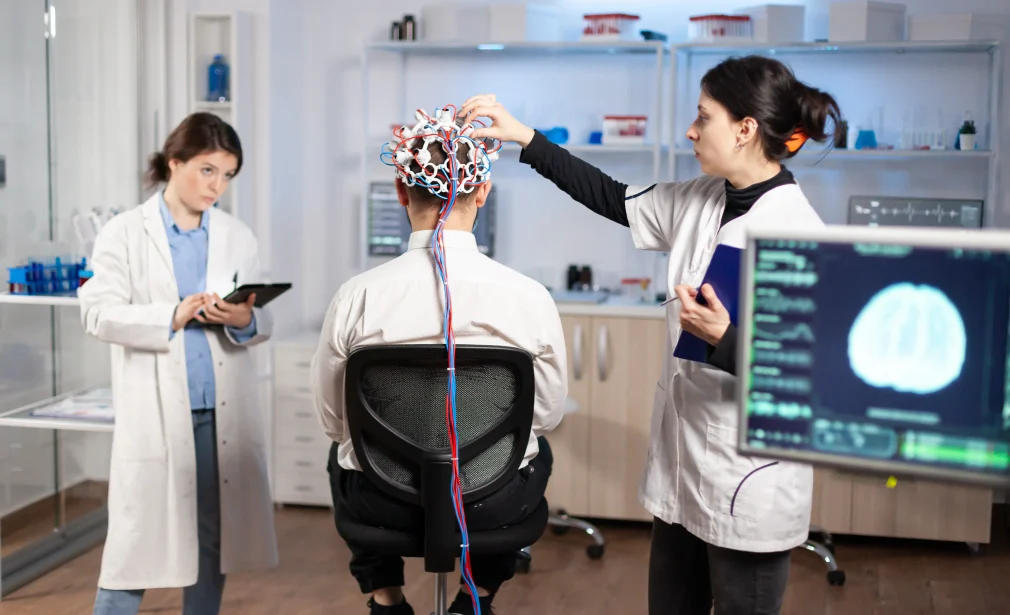
World-Class Neurosurgery: Advanced Solutions for Brain, Spine, and Nerve Conditions
World-Class Neurosurgery in Poland: Advanced Care for the Nervous System
Neurosurgery stands at the pinnacle of medical science, a highly specialized field dedicated to the diagnosis, treatment, and rehabilitation of disorders affecting the body’s most intricate and vital command center: the nervous system. It is a discipline that combines profound medical knowledge with surgical precision to address some of the most complex conditions known to medicine. More than just a series of operations, modern neurosurgery represents a comprehensive approach to care, offering hope and restoration to individuals facing challenges of the brain, spinal cord, and peripheral nerves. The ultimate goal is to restore function, relieve debilitating pain, and dramatically improve the quality of life for patients and their families. Whether controlling a seizure disorder, eliminating a tremor, removing a tumor, or correcting a spinal deformity, neurosurgical interventions can have a life-altering impact.
This field has evolved far beyond the traditional concept of “brain surgery.” Today, it encompasses a holistic management philosophy that includes operative and non-operative strategies, from prevention and critical care to diagnosis and long-term rehabilitation. A consultation with a neurosurgeon is the first step in a comprehensive evaluation, where all treatment avenues are explored. In many world-class centers in Poland, expert neurosurgeons often explore non-surgical options such as medication, targeted injections, or physical therapy before a surgical path is recommended. This patient-centric approach ensures that surgery is considered only when it represents the most effective and appropriate course of action, providing reassurance that the primary goal is always the best possible outcome for the individual. This comprehensive management is made possible by continuous advancements in technology, including computer-based neuronavigation, spinal biomechanics, and minimally invasive endovascular techniques, making neurosurgery one of the most technologically sophisticated disciplines in medicine today.
The Comprehensive Scope of Modern Neurosurgical Care
Neurological surgery is a broad and multifaceted discipline that provides operative and non-operative management for a vast array of disorders affecting the central, peripheral, and autonomic nervous systems. The domain of a neurosurgeon is extensive, requiring an expert understanding of the delicate structures that govern thought, sensation, and movement. This includes the diagnosis and treatment of conditions impacting the brain, its protective coverings (meninges), the skull, and their intricate blood supply. The scope extends to the spinal cord, the spinal column that encases it, and the network of peripheral nerves that branch out to every part of the body. Neurosurgeons also manage disorders of the pituitary gland, a critical hormone-regulating center located at the base of the brain.
The complexity of the nervous system has led to the development of numerous, distinct subspecialties within the field of neurosurgery. This high degree of specialization is a hallmark of an advanced and mature medical system, ensuring that patients receive care from a physician with dedicated expertise in their specific condition. This structure mirrors the organization of the world’s leading academic medical centers and signifies a deep institutional commitment to excellence. For patients traveling internationally for care, this means they can be matched not just with a general neurosurgeon, but with a subspecialist whose career has been focused on addressing their unique diagnosis.
Key neurosurgical subspecialties include:
- Spinal Neurosurgery: Focuses on a wide range of conditions affecting the spinal column and spinal cord, including herniated discs, spinal stenosis, tumors, fractures, and deformities like scoliosis.
- Neurosurgical Oncology: Specializes in the surgical treatment of both primary and metastatic tumors of the brain and spine.
- Vascular and Endovascular Neurosurgery: Manages disorders involving the blood vessels of the brain and spine, such as aneurysms, arteriovenous malformations (AVMs), and stroke.
- Functional Neurosurgery: Addresses disorders that affect the function of the nervous system, including epilepsy, movement disorders like Parkinson’s disease, and chronic pain, often using techniques like deep brain stimulation.
- Pediatric Neurosurgery: Manages the unique neurological conditions affecting children, such as congenital malformations, hydrocephalus, and pediatric brain tumors.
- Peripheral Nerve Surgery: Treats conditions affecting the nerves outside the brain and spinal cord, such as carpal tunnel syndrome, nerve injuries, and tumors.
- Pituitary and Neuroendocrine Surgery: Focuses on the treatment of tumors and other abnormalities of the pituitary gland.
- Trauma Neurosurgery: Manages acute injuries to the brain and spine resulting from accidents or other external forces.
Conditions Addressed with Neurosurgical Expertise
Neurosurgeons in Poland diagnose and treat an exceptionally broad spectrum of pathological disorders, ranging from common degenerative conditions to rare and complex tumors. The ability of the Polish healthcare system to maintain expertise across such a wide array of conditions is a direct indicator of its high patient volume and extensive clinical experience—factors that are strongly correlated with superior patient outcomes. This comprehensive capability ensures that no matter the diagnosis, the required specialized knowledge and technical skill are readily available.
Conditions are typically categorized by the area of the nervous system they affect.
Brain Conditions
The brain is the central focus of many neurosurgical interventions, which aim to treat structural abnormalities, control disease, and preserve or restore neurological function.
- Brain Tumors: Neurosurgeons treat abnormal growths within the skull, which can be benign (non-cancerous) or malignant (cancerous). Treatment is tailored to the tumor type, location, and size. Common examples include:
- Benign Tumors: Meningiomas, pituitary adenomas, and acoustic neuromas, which do not spread but can cause significant symptoms by compressing brain tissue.
- Malignant Tumors: Aggressive cancers like glioblastoma and astrocytoma that originate in the brain.
- Metastatic Tumors: Cancers that have spread to the brain from other parts of the body, such as the lungs or breasts.
- Cerebrovascular Disorders: These conditions involve the blood vessels supplying the brain and can lead to life-threatening events like strokes.
- Aneurysms: Weak, bulging spots on the wall of a brain artery that can rupture and cause bleeding (hemorrhagic stroke).
- Arteriovenous Malformations (AVMs): Abnormal tangles of blood vessels that disrupt normal blood flow and pose a risk of bleeding or seizures.
- Cavernous Malformations: Abnormal clusters of small blood vessels that can leak and cause neurological symptoms.
- Functional and Movement Disorders: These conditions are characterized by abnormal brain activity that disrupts normal function.
- Epilepsy: A neurological disorder marked by recurring seizures. Surgery may be an option when medications are ineffective.
- Parkinson’s Disease, Essential Tremor, and Dystonia: Movement disorders that can be treated with procedures like Deep Brain Stimulation (DBS) to regulate abnormal brain signals.
- Trigeminal Neuralgia: A chronic pain condition causing severe facial pain, which can be treated with microvascular decompression.
- Other Brain Conditions:
- Hydrocephalus: An accumulation of cerebrospinal fluid (CSF) within the brain, leading to increased pressure.
- Traumatic Brain Injury (TBI): Damage to the brain from an external force, requiring intervention to manage swelling, bleeding, or skull fractures.
- Congenital Conditions: Such as Chiari malformation, where brain tissue extends into the spinal canal.
Spinal Conditions
Spinal neurosurgery aims to relieve pain, restore mobility, and correct structural problems affecting the spinal column and the delicate spinal cord it protects.
- Degenerative Spine Disease: Conditions resulting from age-related wear and tear are among the most common reasons for spinal surgery.
- Herniated Discs: When the soft inner material of a spinal disc pushes out and compresses a nerve root or the spinal cord.
- Spinal Stenosis: A narrowing of the spinal canal that puts pressure on the nerves and spinal cord.
- Spondylolisthesis: A condition where one vertebra slips forward over the one below it.
- Spinal Tumors and Deformities:
- Spinal Tumors: Both primary tumors originating in the spine and metastatic tumors that have spread from elsewhere.
- Spinal Deformities: Curvatures of the spine such as scoliosis (sideways curvature) and kyphosis (forward rounding).
- Spinal Trauma:
- Spinal Fractures and Spinal Cord Injury: Injuries to the vertebrae or the spinal cord itself, often requiring surgery to stabilize the spine and decompress the neural elements.
Peripheral Nerve Conditions
Neurosurgery also addresses disorders of the nerves outside the brain and spinal cord, aiming to restore function and relieve pain.
- Nerve Compression Syndromes: Conditions like carpal tunnel syndrome, where a nerve is squeezed by surrounding tissues.
- Nerve Injuries: Traumatic damage to nerves that may require surgical repair.
- Peripheral Nerve Tumors: Benign or malignant growths that arise from the nerves themselves, such as schwannomas.
Advanced Neurosurgical Procedures and Technologies
The field of neurosurgery in Poland is defined by its rapid adoption of cutting-edge technology, which allows surgeons to perform increasingly complex procedures with greater precision, safety, and efficacy. Modern neurosurgical centers in cities like Warsaw, Kraków, Wrocław, and Poznań are equipped with a sophisticated arsenal of tools and techniques designed to minimize surgical trauma and optimize patient outcomes. This technological ecosystem ensures that treatment is not one-size-fits-all; instead, specialists can select the most appropriate and least invasive tool for each patient’s unique condition, creating a truly personalized treatment plan.
Minimally Invasive vs. Traditional Neurosurgery
A fundamental evolution in neurosurgery has been the development of minimally invasive surgery (MIS), which stands in contrast to traditional open procedures. While open surgery remains the gold standard for certain large or complex pathologies, MIS offers significant benefits when applicable.
Traditional Open Surgery, such as a craniotomy, involves a larger incision and the temporary removal of a section of the skull to provide the surgeon with a wide field of view and direct access to the brain. This approach is essential for many complex tumor resections and trauma cases.
Minimally Invasive Neurosurgery (MIS), by contrast, utilizes small, targeted openings or natural corridors (like the nasal passages) to access the brain or spine. Surgeons use specialized instruments, including endoscopes (thin tubes with a camera and light) and microscopes, to visualize the surgical site through these small “keyhole” incisions. This approach has revolutionized patient care by dramatically reducing collateral tissue damage.
The benefits of MIS for the patient are vast and directly impact their recovery experience. A shorter hospital stay and faster recovery are particularly advantageous for international patients, as it translates to a shorter trip, less time away from work and family, and lower associated travel costs.
| Feature | Traditional Open Surgery | Minimally Invasive Neurosurgery (MIS) |
| Incision Size | Large (several inches) | Small (one or more keyhole incisions) |
| Tissue Disruption | Significant muscle and tissue retraction | Minimal disruption to surrounding tissue |
| Blood Loss | Higher potential | Significantly reduced |
| Post-Operative Pain | More significant | Less pain, reduced need for medication |
| Hospital Stay | Several days to over a week | Shorter stay (often 1-3 days) |
| Recovery Time | Weeks to months | Faster return to normal activities |
| Scarring | More prominent | Minimal scarring |
| Best Suited For | Large or complex tumors, trauma | Specific tumors, spinal conditions, pituitary surgery |
State-of-the-Art Treatment Modalities in Poland
Hospitals in Poland are at the forefront of European neurosurgical innovation, offering a full spectrum of advanced technologies. This comprehensive availability signifies a deep commitment to providing the best possible solution for any given neurological problem.
- Neuronavigation and Intraoperative Imaging (O-Arm, Intraoperative MRI): Often described as a “GPS for the surgeon,” neuronavigation uses advanced imaging to create a 3D map of the patient’s brain or spine. This allows surgeons to plan the safest possible route to a tumor and track their instruments with millimeter-level precision in real-time. Technologies like intraoperative MRI and O-Arm CT provide live imaging during the procedure, enabling surgeons to confirm the extent of tumor removal before concluding the surgery, thereby reducing the risk of complications and the need for follow-up operations.
- Robotic-Assisted Surgery (ROSA): Robotic systems enhance a surgeon’s ability to perform complex procedures with greater precision, stability, and control. In neurosurgery, robotics are particularly valuable for the highly accurate placement of electrodes for deep brain stimulation and for complex spinal instrumentation.
- Radiosurgery (Gamma Knife, CyberKnife): This is a non-invasive form of radiation therapy, often called “surgery without a scalpel”. It delivers hundreds of highly focused beams of radiation to a precise target, such as a tumor or vascular malformation, with minimal impact on surrounding healthy tissue. It is an ideal treatment for deep-seated or hard-to-reach lesions and offers a rapid, incision-free recovery.
- Deep Brain Stimulation (DBS): A life-changing procedure for movement disorders, DBS acts like a “brain pacemaker”. It involves the surgical implantation of thin electrodes into specific areas of the brain that control movement. These electrodes are connected to a small generator device implanted in the chest, which sends electrical impulses to regulate abnormal brain signals, significantly reducing symptoms like tremor, rigidity, and slowness of movement.
- Endoscopic Neurosurgery: This minimally invasive technique uses small, flexible endoscopes to perform surgery through tiny incisions or natural openings. A common application is transsphenoidal surgery, where a surgeon can remove pituitary tumors by passing an endoscope through the nasal cavity, resulting in a faster recovery with no visible scarring.
Why International Patients Choose Poland for Neurosurgery
Poland has firmly established itself as a leading destination in Europe for high-quality, affordable neurosurgical care. For patients from Germany, Scandinavia, the UK, and North America, Poland offers a compelling combination of medical excellence, advanced technology, renowned specialists, and exceptional value—making it a top-tier choice for complex neurological treatment.
Uncompromising Quality at an Accessible Cost
The central value proposition of seeking neurosurgical care in Poland is the ability to access uncompromising quality at a significantly lower cost. International patients can expect to save **50–70%** on complex procedures compared to costs in the United States and Western Europe, without any sacrifice in the quality of care, technology used, or surgeon expertise. This remarkable cost-effectiveness is a result of favorable economic factors and a highly efficient healthcare system, allowing patients to receive top-tier treatment that might be financially prohibitive in their home countries.
Expert Surgeons and High-Standard Medical Facilities
Poland’s reputation for neurosurgical excellence is built on its strong medical education system and state-of-the-art hospitals.
- EU-Compliant Hospitals: Leading neurosurgical centers in Poland adhere to strict European Union healthcare standards. While formal JCI accreditation is less common, many hospitals undergo rigorous national and EU-level quality audits and maintain affiliations with European medical networks. Facilities in Warsaw, Kraków, and Wrocław are equipped with the latest neurosurgical technology and provide care in modern, patient-friendly environments.
- Highly Trained Neurosurgeons: Polish neurosurgeons undergo extensive training and often continue their education through fellowships in Germany, the UK, or the US. Many are active members of international neurosurgical societies, publish in peer-reviewed journals, and speak fluent English, ensuring clear communication and world-class expertise.
Access to Cutting-Edge Technology and Minimal Wait Times
One of the most significant advantages for international patients is immediate access to both specialists and the latest medical technology. In many national health systems, patients face long waiting lists for consultations and surgery. In Poland’s private healthcare sector, patients can typically schedule a consultation and procedure within weeks. This rapid access is critical for time-sensitive conditions and ensures timely intervention for better outcomes. Combined with access to Gamma Knife, robotic surgery, and intraoperative imaging, Poland offers prompt, high-tech care without compromise.
Your Patient Journey: A Seamless Path to Recovery
Embarking on a journey for neurosurgery in a foreign country can seem daunting. However, with the support of a dedicated medical travel facilitator, this complex process is transformed into a structured, fully managed, and stress-free experience. The primary goal is to remove the burden of logistics, allowing patients and their families to focus entirely on health and recovery.
- Step 1: Initial Consultation and Personalized Treatment Planning: The journey begins remotely. A care coordinator facilitates a virtual consultation, during which your medical records and imaging (MRI, CT scans) are reviewed by a leading Polish neurosurgeon. You’ll receive a detailed treatment plan, expected outcomes, and transparent pricing.
- Step 2: Coordinated Travel and Logistics: Once you decide to proceed, your team handles flight bookings, medical visas, hotel accommodations, and all ground transportation—ensuring a seamless arrival.
- Step 3: Arrival and Pre-Operative Care: Upon arrival, you’re greeted by a representative. You’ll meet your surgeon in person, undergo final tests, and receive pre-op instructions with the help of a multilingual coordinator.
- Step 4: Your Procedure in a Top-Tier Facility: Surgery is performed in a modern, EU-standard hospital equipped with neuronavigation, intraoperative monitoring, and advanced imaging to ensure maximum safety and precision.
- Step 5: Post-Operative Recovery and Rehabilitation: You’ll recover in a private room with attentive care. Many centers offer early rehabilitation, including physical therapy, to support optimal recovery.
- Step 6: Follow-Up and Continuity of Care: Before returning home, you receive comprehensive medical records and post-op instructions. Your Polish care team can provide remote follow-ups via telehealth and coordinate with your local physician for seamless continuity of care.
Looking for a specific treatment?Be low is a list of the most popular treatments offered by the clinics we work with.
If you don’t see the treatment you’re looking for – don’t worry! Our partner clinics offer a much wider range of procedures, and we’re here to help you find exactly what you need.
Just get in touch with us – we’re confident we can match you with the right clinic and treatment.
- Cervical discectomy using coblation
- Average stay in Poland: 3 – 5 days
- Minimally invasive procedure for removing a fragment of the intervertebral disc nucleus in the cervical spine using plasma energy.
- The procedure is usually performed under local anesthesia or short intravenous sedation and lasts about 30–60 minutes.
- The patient can return home the same day.
- Recovery usually lasts a few days.
- Removal of intervertebral disc herniation using an endoscopic method
- Average length of stay in Poland: 3 – 6 days
- A modern procedure performed through a small incision, using an endoscope and camera, allowing for precise removal of the herniation without damaging the tissues.
- Conducted under general anesthesia and lasts 60–90 minutes.
- The patient usually leaves the hospital the same or the next day.
- Return to normal activity is possible within 1–2 weeks.
- Vertebroplasty
- Average stay in Poland: 2 – 4 days
- The procedure involves the percutaneous injection of a special bone cement into the body of a fractured vertebra to strengthen it.
- It is performed under local or general anesthesia and lasts about 30–60 minutes.
- The patient experiences rapid pain relief and usually returns home on the same day.
- Recovery typically lasts several days.
- Lumbar Microdiscectomy
- Average stay in Poland: 3 – 5 days
- A precise operation to remove a fragment of the disc pressing on the nerve root, performed using a surgical microscope.
- The procedure is done under general anesthesia and lasts about 60-90 minutes.
- Hospitalization usually lasts 1 day.
- Return to work is possible after about 2-4 weeks.
- Lumbar Foraminotomy
- Average length of stay in Poland: 3 – 5 days
- The procedure involves widening the intervertebral foramen to relieve pressure on the nerve root.
- It is performed under general anesthesia and lasts about 60 minutes.
- It is most often a one-day procedure.
- Recovery lasts from a few days to a few weeks, depending on the patient’s condition.
- Thermal Anuloplasty
- Average length of stay in Poland: 3 – 5 days
- The procedure involves inserting an electrode into the fibrous ring and heating it to seal and stabilize it.
- It is performed under local anesthesia and lasts 30–45 minutes.
- The patient usually returns home on the day of the procedure.
- Recovery takes a few days.
- Intradiscal Electrothermal Therapy (IDET)
- Average length of stay in Poland: 2 – 4 days
- This technique involves inserting a thin electrode into the disc and heating it to reduce pain caused by microtears.
- The procedure is performed under local anesthesia or short intravenous sedation and lasts about 45 minutes.
- The patient leaves the clinic the same day.
- Improvement occurs within a few weeks.
- Percutaneous nucleoplasty using the coblation method
- Average length of stay in Poland: 2 – 4 days
- A minimally invasive procedure performed under local anesthesia, involving the removal of a portion of the nucleus pulposus using plasma energy.
- The duration is 30-45 minutes.
- The patient usually returns home after a few hours.
- Recovery takes several days.
- Dynamic spine stabilization procedure
- Average stay in Poland: 5 – 7 days
- The procedure involves stabilizing a segment of the spine while maintaining its flexibility and natural range of motion.
- It is performed under general anesthesia and lasts from 1.5 to 2 hours.
- Hospitalization typically lasts 1-2 days.
- Full return to activity occurs after several weeks of rehabilitation.
- Tarsal tunnel release surgery
- Average stay in Poland: 2 – 3 days
- A surgical procedure aimed at releasing the tibial nerve in the tarsal tunnel, most often performed under local anesthesia.
- It lasts about 30-45 minutes.
- The patient usually returns home the same day.
- Full recovery occurs within 2-3 weeks.
Online simple step for appointment

Make Appointment

Select Doctor
Get Consultation
Frequently asked questions
Yes, neurosurgery in Poland is exceptionally safe. The country’s leading private hospitals adhere to the highest international standards, with many holding JCI accreditation, which is a global benchmark for quality and patient safety.
Neurosurgeons in Poland are highly qualified, having completed one of the longest and most rigorous medical residency programs. Many of the top specialists have pursued additional fellowships and advanced training at leading medical institutions in the United States and Europe, such as Johns Hopkins University, Cleveland Clinic, and various universities in Germany.